
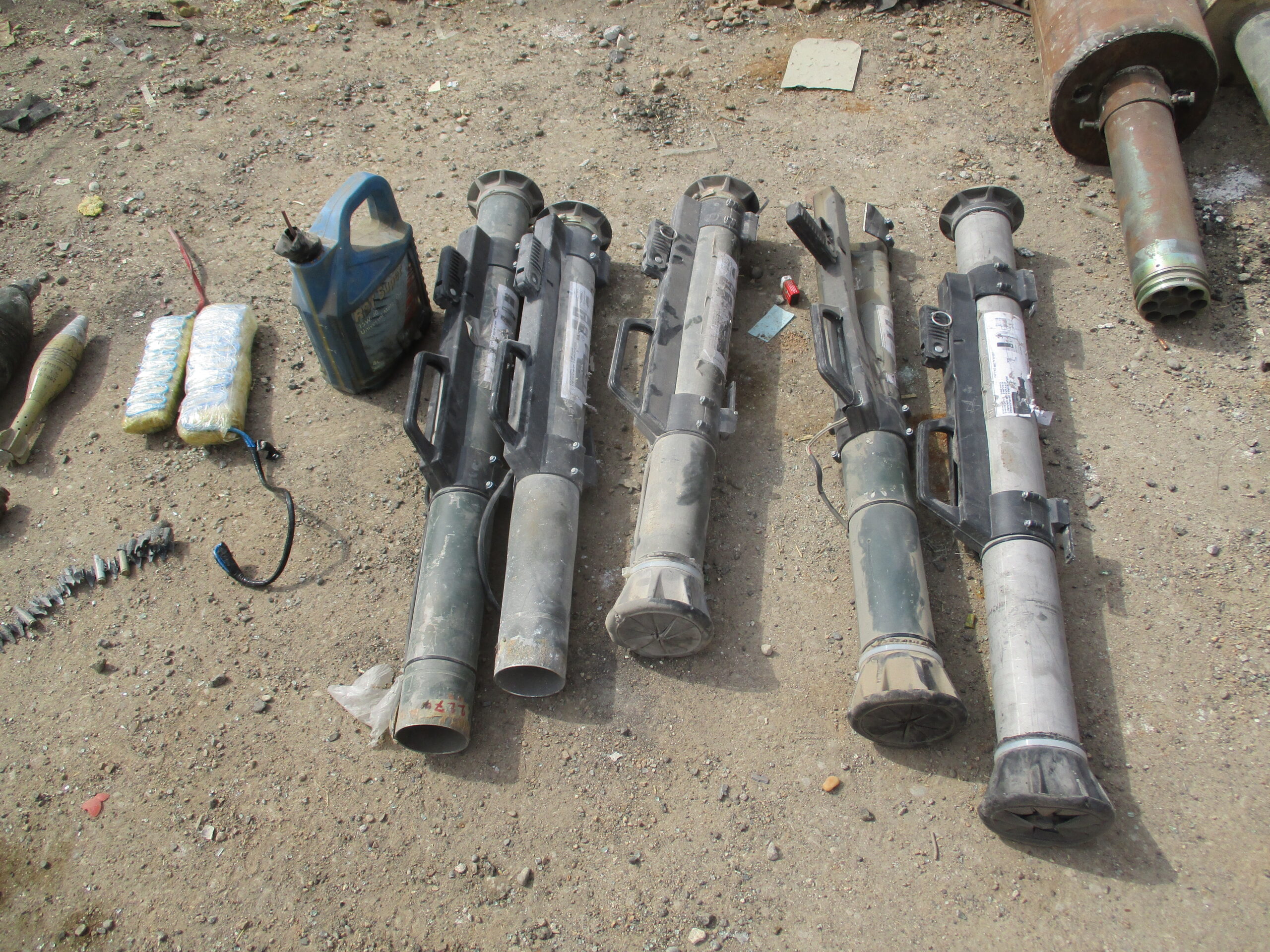
Armament Research Services (ARES) is pleased to announce the release of Special Report No. 6, Islamic State Craft-produced Light Recoilless Guns: Conventional & Chemical Variants. Special Report 6 examines the variety of shoulder-fired light recoilless guns developed by the so-called ‘Islamic State’ (IS), providing a detailed assessment of their technical characteristics, design, and operation. The report also offers the first publicly identified images of munitions associated with IS’s little understood direct-fire chemical weapons capability.
Authored by N.R. Jenzen-Jones, Drew Prater, Tony Salvo, Charles Randall and Mick F., the report is based on physical access to the arms and munitions in question, detailed examination of a variety of confidential and open-source materials, and the authors’ considerable experience studying chemical weapons use in modern conflict, particularly in Syria.
The report documents four distinct Types of conventional light recoilless guns craft-produced by IS, detailing the design of their gripstock assemblies, expelling charges, countermass, projectile fin assemblies, and barrels. It also identifies a fifth Type: a light recoilless gun firing a rocket-assisted munition containing sulphur mustard, recovered in Iraq alongside other IS-manufactured projectiles. This Type 5 munition, although documented without a complete associated weapon, provides compelling evidence of a direct-fire chemical capability in the IS arsenal.
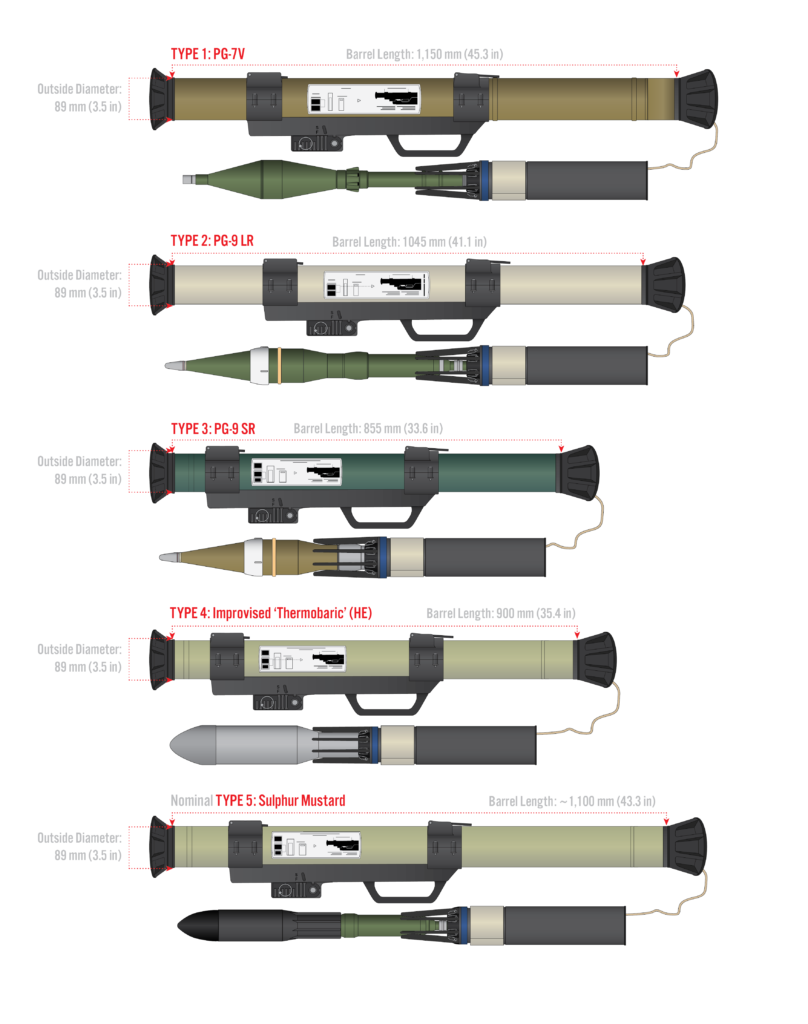
By publishing Special Report 6, ARES seeks to provide a comprehensive technical understanding of IS craft-produced recoilless guns and their munitions—including a chemical weapons capability—highlighting the implications for threat assessment, force protection, and the broader study of improvised and craft-produced weapons in conflict zones.
To read the full publication, click here. For more publications from ARES, see our Publications page.
Remember, all arms and munitions are dangerous. Treat all firearms as if they are loaded, and all munitions as if they are live, until you have personally confirmed otherwise. If you do not have specialist knowledge, never assume that arms or munitions are safe to handle until they have been inspected by a subject matter specialist. You should not approach, handle, move, operate, or modify arms and munitions unless explicitly trained to do so. If you encounter any unexploded ordnance (UXO) or explosive remnants of war (ERW), always remember the ‘ARMS’ acronym:
AVOID the area
RECORD all relevant information
MARK the area from a safe distance to warn others
SEEK assistance from the relevant authorities